The energy sector is at an inflection point. Rapid demand growth—driven in part by data centers, advanced manufacturing, hospitals, government facilities, and other large-load users—is stressing existing systems.
At the same time, aging infrastructure, interconnection delays, and local permitting challenges are making it harder to bring new generation online at the pace the market requires.
To meet these escalating challenges in the modern energy marketplace, regulators and industry stakeholders should consider a more diversified approach that combines traditional generation sources like natural gas with renewables and nuclear to ensure sufficient coverage.
One strategy to meet this goal is to focus strategic investment in four key areas:
- Streamlining regulatory and permitting bottlenecks
- Continuing investment in wind, solar, and storage
- Renewing conversations around nuclear for high-demand locations
- Modernizing the grid so infrastructure can support growth
By emphasizing these areas, stakeholders can build a balanced portfolio that integrates natural gas, renewables, nuclear, and emerging technologies to maintain grid reliability while advancing decarbonization goals.
Understanding the Regulatory Bottleneck
Interconnection queue delays are widely recognized as a barrier to project development, reflecting the volume of generation seeking to connect to the grid. However, local zoning and permitting processes are an equally significant, yet underappreciated, constraint on new development.
Renewable energy projects, especially wind and solar, often require a Conditional Use Permit (CUP) or Special Use Permit (SUP) before meaningful development can begin. These processes introduce variability and uncertainty for developers because requirements vary widely by state, county, and locality. One county may have strict standards that limit development, while a neighboring county may be more open to new energy projects.
Addressing these challenges requires more than regulatory reform alone.
Early and meaningful community engagement—supported by clear communication on safety, technological advancements, and local economic benefits—can build trust and reduce friction. Projects that prioritize transparency and collaboration tend to advance through permitting more efficiently.
At the same time, many jurisdictions are modernizing their frameworks to meet the growing surge in demand. Emerging model ordinances aim to transition qualifying renewable projects from discretionary approval processes to “by-right” pathways, provided defined standards are met.
Adoption of these approaches can reduce early-stage risk while preserving local oversight and accountability.
This is where experienced planning, engineering, environmental, and permitting support can make a measurable difference. Energy projects move faster when technical requirements, regulatory expectations, and community concerns are addressed together instead of in separate tracks.
Renewables Remain a Critical Part of the Energy Mix
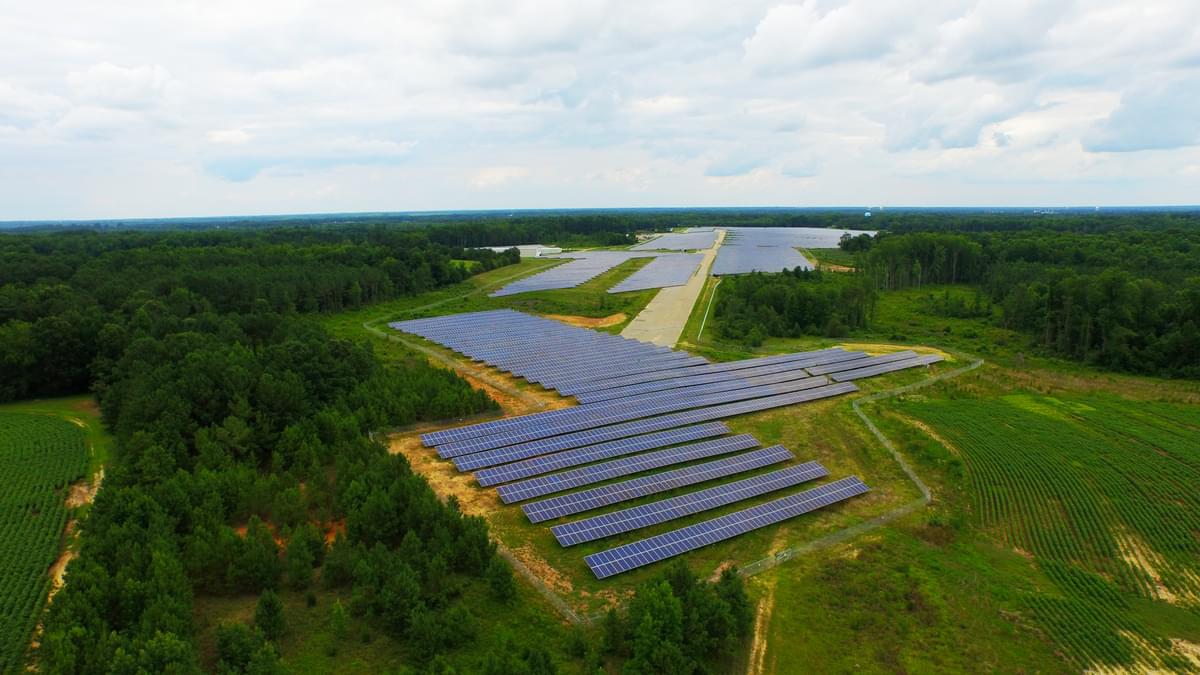
An aerial view of a solar farm based in Halifax County, North Carolina.
Renewables have historically accounted for a major portion of the U.S. energy generation portfolio, with the share of solar in particular showing strong growth over the past several decades.
Today, renewable sources account for roughly 20% of utility-scale electricity generation, with nuclear contributing a similar share and fossil fuels supplying the remainder.
Solar is further expected to remain one of the fastest-growing sources of new capacity over the next two decades. The U.S. Energy Information Administration has noted that almost 70 gigawatts of new solar generating capacity are scheduled to come online in 2026 and 2027, representing a 49% increase in U.S. solar operating capacity compared with the end of 2025.
That growth is not just a policy trend. It reflects both strong market demand and ongoing improvements in cost and performance for solar installations.
In many regions, energy demand is growing faster than new generation can be approved, built, and connected to the broader grid, leading to interconnection delays and bottlenecks in economic development due to uncertainty around energy availability.
Wind, solar, and storage projects can help fill that gap, especially in areas where other forms of generation face infrastructure, geographic, or siting constraints.
Stakeholders should avoid viewing renewables as a complete replacement for existing generation needs, especially in the short-term.
However, they offer several advantages over traditional generation methods, and, when paired with storage, transmission planning, and other reliable generation sources, can help diversify the grid and reduce pressure on already strained systems during moments of peak demand.
The key is to bring viable renewable projects online faster and more predictably. That requires clearer permitting pathways, better coordination with local governments, and continued investment in the infrastructure needed to support new generation.
Nuclear Presents a Long-Term Reliability Opportunity
While renewables have been the focal point of energy conversations over the past several years, nuclear power is returning to the mainstream discussion as a direct solution to an increasing number of large-load projects.
The reason is straightforward: some of the fastest-growing energy users need large amounts of power around the clock.
Data centers, advanced manufacturing facilities, hospitals, and government operations cannot rely on intermittent resources or battery storage solutions alone. They need dependable, high-volume power generation sources to match the associated increase in baseload demand generated from their operations.
Nuclear power can support that need because it produces steady, carbon-free energy regardless of weather conditions.
Small Modular Reactors, or SMRs, are drawing particular interest because they offer a more flexible option when compared to traditional large-scale nuclear plants. SMRs are especially relevant for high-demand locations where land, transmission, or reliability constraints limit other options.
However, it’s important to note that nuclear is not a short-term fix, but rather a long-term play to keep up with projected load demands.
Procurement and development timelines can stretch eight to twelve years, depending on the scale and complexity of the project, making nuclear a long-term reliability strategy, not an immediate answer to today’s capacity challenges.
For industry leaders and policymakers, the takeaway is clear. If nuclear is to play a meaningful role in future supply, planning and investment must occur now. Strategic alignment among policymakers, utilities, and private-sector partners will be essential to advancing projects at the pace required.
Grid Modernization is the Foundation for Future Growth
While expanding generation is critical, the effectiveness of any energy strategy ultimately depends on the grid’s ability to deliver power where and when it is needed. Much of today’s infrastructure was built decades ago and is increasingly strained by the scale and variability of modern demand.
Grid modernization includes more than replacing old equipment. It means expanding capacity, strengthening transmission and distribution systems, improving reliability, and using better data to manage demand and system performance. It also means planning for future growth before constraints become emergencies.
These improvements may not generate the same attention as a new solar farm, data center, or nuclear project. But without a stronger grid, new generation assets may not be fully utilized, and system reliability will remain at risk.
A modern grid is the foundation for a more reliable energy future. It supports economic growth, improves resilience, and gives communities and businesses greater confidence that the system can keep pace with change.
Why an All-Hands-On-Deck Strategy is the Practical Path Forward
Energy demand is accelerating, driven by structural shifts in the economy and the rapid growth of compute-intensive technologies. Meeting this demand will require a pragmatic, coordinated approach that balances near-term needs with long-term objectives.
Meeting future demand will require a practical mix of near-term action and long-term planning. That means using credible generation sources, speeding up responsible project approvals, investing in the grid, and making room for new technologies as they mature.
An all-hands-on-deck strategy reflects the scale of the challenge. It recognizes that no single resource can carry the full load. Natural gas, renewables, nuclear, storage, and transmission upgrades all have a role in building a more reliable and resilient energy system.
For industry stakeholders, the priority should be clear: move faster where projects make sense, plan earlier for long-term needs, and work across public and private sectors to reduce the barriers that slow progress.
The demand is here. It is growing. And the communities, businesses, and institutions depending on reliable energy need a system that can keep up.