For local government leaders, the question is no longer whether grants will factor into capital projects, but whether the organization is ready to capitalize on opportunities when they appear.
Over the past several years, obtaining funding for infrastructure projects has become more complex and competitive. More recently, the availability of federal funding has become far less predictable. Programs shift direction, requirements change; application windows shrink, and some funding sources pause altogether.
At the same time, project costs continue to rise, making it difficult to accurately assess the right moment to move forward with projects that rely at least in part on grants and other alternative funding sources.
Despite years of experience and hard-earned lessons, many public agencies still find themselves in reactive mode—scrambling to update scopes, pull together documentation, or secure approvals after a funding notice is released. In today’s environment, that approach carries real risk.
Grant readiness offers a different path. It helps organizations stay focused on their priorities, even when funding conditions are unstable.
At its core, grant readiness is not about pursuing every available grant but rather making key decisions early so that when funding becomes available, leaders are prepared to act without losing time or momentum.
This post outlines what grant readiness looks like in practice, why it matters, and how public owners can strengthen readiness across the full life of a project.
Grant Readiness Is Not a One-time Checklist
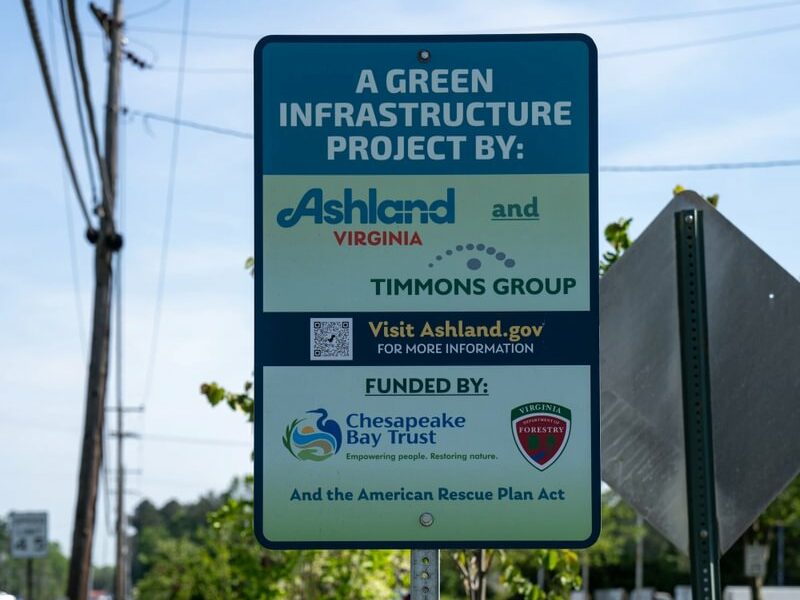
Timmons Group provided the Town of Ashland, VA both engineering and grant support services for the Frontage Road Grass Channel Project, which leveraged more than $100,000 in funds from grants to support the development of a new grass channel to reduce stormwater runoff and improve water quality.
Grant readiness is often misunderstood as a single, linear process with a standardized structure:
- A funding opportunity opens
- A team assembles to make a quick go/no-go decision
- An application is prepared and submitted to the funding body
- Everyone waits (sometimes for months)
- The funding body releases their decision, and hopefully there’s something to celebrate
However, this approach to grant readiness is based on reacting to grant opportunities as they appear, as opposed to preparing for opportunities from the project outset.
In reality, a successful, proactive grant readiness program reflects something much deeper. It shows that an organization has already done the hard work of planning, prioritizing, and aligning funding strategies with its most important projects.
Grant readiness is less about a moment in time and more about building an organizational habit that connects planning, finance, engineering, procurement, and leadership.
Small, practical steps can make a meaningful difference. Over time, these habits help organizations move from reactive to proactive.
Small Steps toward Grant Readiness
Strengthening grant readiness starts with a few focused, practical steps. By addressing key areas early, organizations can reduce uncertainty, improve coordination, and move more confidently when funding becomes available.
Plan for Risk & Delays
One of the biggest challenges in today’s funding environment is timing. Many capital projects rely on multiple funding sources, each with their own rules, approval processes, and reimbursement schedules.
Delays are common. When reimbursements are held up, projects can stall and costs can increase.
Grant-ready organizations plan for this uncertainty by asking smart questions during the initial planning process:
- How long will approvals and agreements take?
- When can we realistically expect reimbursements?
- Can local funds temporarily cover project costs?
- What happens if a funding source is delayed or reduced?
No one can predict the future, but thinking through these questions early builds resilience into schedules and budgets. It allows leaders to make informed decisions and avoid unnecessary disruptions when conditions change, bringing more certainty and clarity to the project as a whole.
Align Funding Decisions with the Capital Plan
A common pitfall is allowing grant opportunities to drive project decisions. Chasing funding without a clear strategy can push projects forward too soon, sideline higher priority projects, and strain staff capacity.
Taking a grant-readiness approach flips that dynamic.
Instead of asking, “What can we apply for?” organizations should instead frame their approach through a lens of alignment with the project’s overall goals.
Does the funding pursuit support the overall capital improvement plan? What have we learned from past applications that we can apply to this opportunity? Can we meet with the funding body to discuss our strategy before applying? When grants support the capital plan, rather than reshape it, funding decisions reinforce long-term goals, lower resource investments, and reduce disruption.
Grant Readiness is an Organizational Habit
For smaller localities without a dedicated grant writer, pursuing a large grant can quickly become an all-hands-on-deck effort. That energy can be exciting, but it can also be exhausting.
Staying grant-ready, even when no specific opportunity is on the horizon, can help ease that burden. Specifically, making grant readiness an organizational habit can decrease the initial investment of resources needed to prepare a grant proposal by spreading the work out over a longer time frame and building a standardized approach to grant applications.
As a few practical steps, localities may benefit from the following strategies:
- Drafting clear, reusable language that explains why each priority project matters to the community
- Regularly updating project scopes and ensuring they are easy to access
- Understanding where matching funds or in-kind contributions come from, and how they are approved
- Knowing your internal process: who approves applications, if resolutions are required, and when letters of support are needed
While these tips may seem relatively straightforward, they often take more time than expected. Addressing them early can prevent delays during already tight application windows.
Even when a grant isn’t awarded, this work strengthens internal coordination and project delivery.
Keep Core Documents Ready
Even strong projects can stall if key documents are missing or outdated. Most funding programs require clear evidence that a project is feasible and ready to move forward.
Grant-ready organizations maintain a basic set of materials that can be adapted as needed. These can include, but are not limited to, engineering and planning studies, environmental documentation, ownership or site control records, match commitments, and resolutions or letters of support. Keeping these materials organized and up to date reduces stress and allows teams to respond quickly when opportunities arise, especially under tight deadlines.
Why Readiness Matters Now
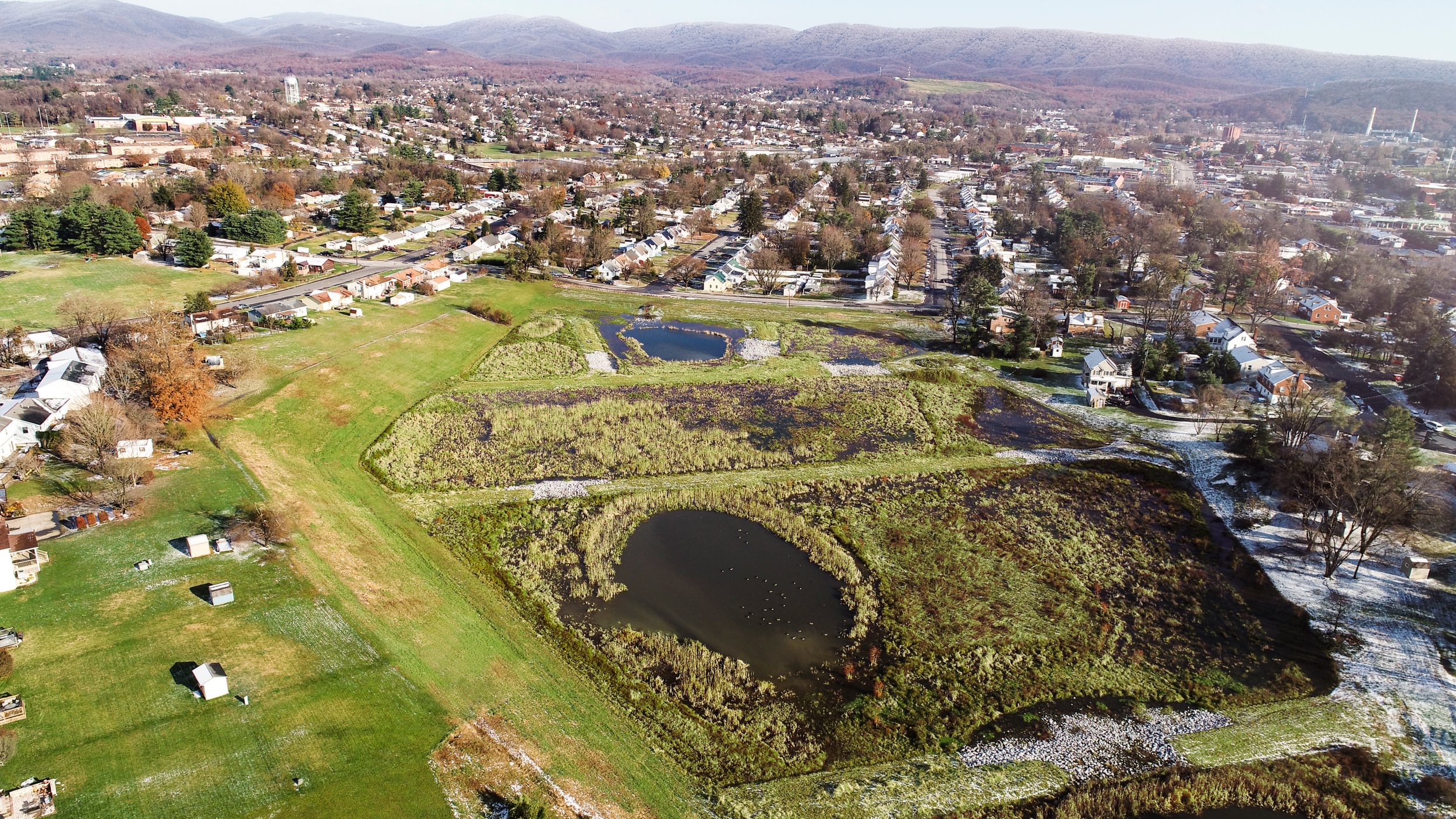
The award-winning Mulberry Run environmental project in Waynesboro, VA was awarded $850,000 in grant funding to retrofit an existing 11-acre dry detention basin into a constructed wetland.
In the past year, federal infrastructure funding has become increasingly uncertain. Budget pressures, continuing resolutions, shutdown threats, and global instability have all affected program timing and availability. Even familiar funding sources can no longer be assumed to open on schedule.
This uncertainty heightens competition and makes it harder to know what funding will be available, when it will open, and how long application windows will remain open.
At the same time, winning awards is becoming increasingly difficult as funding agencies raise expectations—favoring projects that are shovel- or construction-ready and grantees that demonstrate strong organizational capacity.
When implemented effectively, grant readiness enables public owners to stay competitive in this environment.
By aligning funding strategies with the capital plan and preparing in advance, organizations can respond quickly when opportunities emerge, without losing momentum or control.
Today, readiness focuses on managing risk, maintaining flexibility, and protecting the integrity of the capital program.
Grant readiness does not guarantee funding, but it does prepare public owners to respond quickly with clarity and confidence when opportunities arise.