In the world of stream restorations, most of the photos you’ve seen of impressive completed projects probably look something like this:
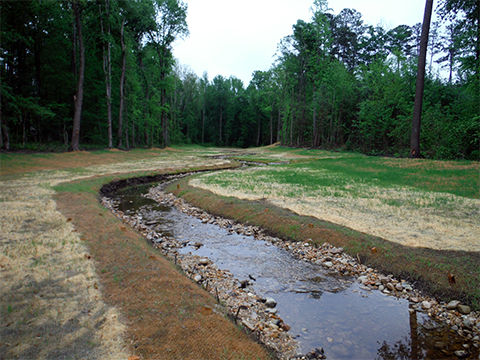
The constructed banks, winding curves, and freshly planted vegetation are a great visualization of the complex design that will soon transform the stream back to a functional and healthy state. However, if you’re looking for a photo that truly demonstrates the long-term success and longevity of a stream restoration, it will probably look something like this:
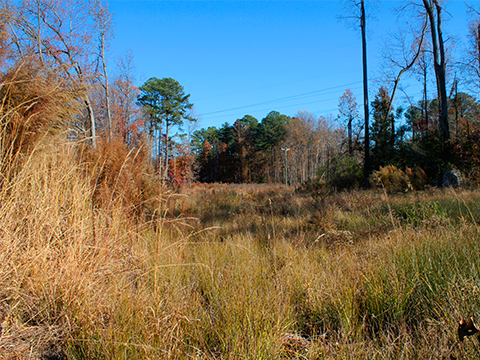
You might be thinking, “Where’s the stream?”
That’s because, although less impressive in photographs, some of the best photos of stream restorations are ones in which the stream is barely visible. When done correctly, a successful stream restoration will allow vegetation to flourish, grow, and evolve in the years following project completion. Would you believe that these two pictures show the same stream? Let’s use our Hungary Creek Stream Restoration as an example of the full stream restoration process.
In 2012, sections of Hungary Creek looked like this:
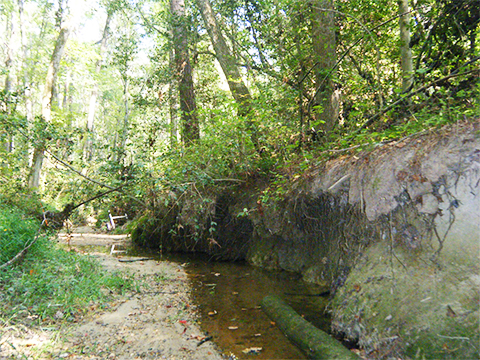
The badly eroded banks were attributing to an unsightly amount of sediment being deposited into the stream channel and nearby Hoehns Lake and causing residents to seek a solution from the County. Under an existing on-call contract with Henrico County, Timmons Group Stormwater and Environmental engineers stepped in to help solve the problem.
Our engineers prepared complete design plans for the restoration of approximately 1,600 linear feet of the stream channel. The County also tasked Timmons Group with estimating the removal rates of nitrogen, phosphorous, and sediment based on the regulations for nutrient load reduction. These nutrients, while essential for plant health and nourishment, can cause several adverse ecological effects when excess levels are present in the water.
Upon project completion, the stream restoration reduced total nitrogen by 545 pounds per year, total phosphorus by 59 pounds per year, and the total amount of sediment was reduced by 19,735 pounds per year. With nutrient levels in check and stabilized banks in place, the stream was able to begin the journey back to health.
Within the first year, green, lush vegetation began to line the banks of the stream.
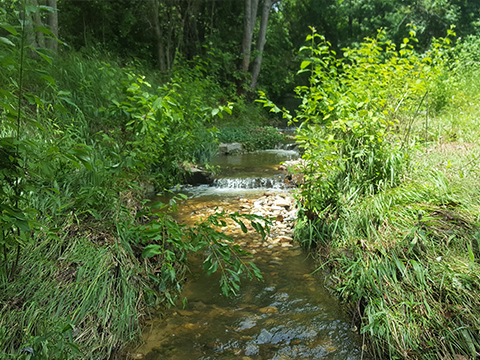
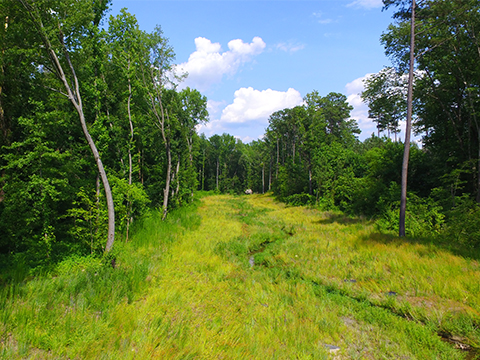
After three years, the surrounding vegetation has grown so tall that the stream can barely be seen in several spots. These strips of undisturbed vegetation surrounding the banks, known as riparian areas, are essential to stream health because they provide erosion and sedimentation control as well as habitat creation.
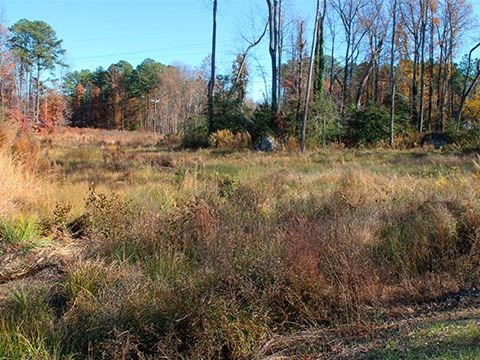
So, while it may be true that the most impressive images of stream restorations are taken shortly after project completion, the true measure of success, although sometimes hard to see, comes several years down the line.